

Quick Answer
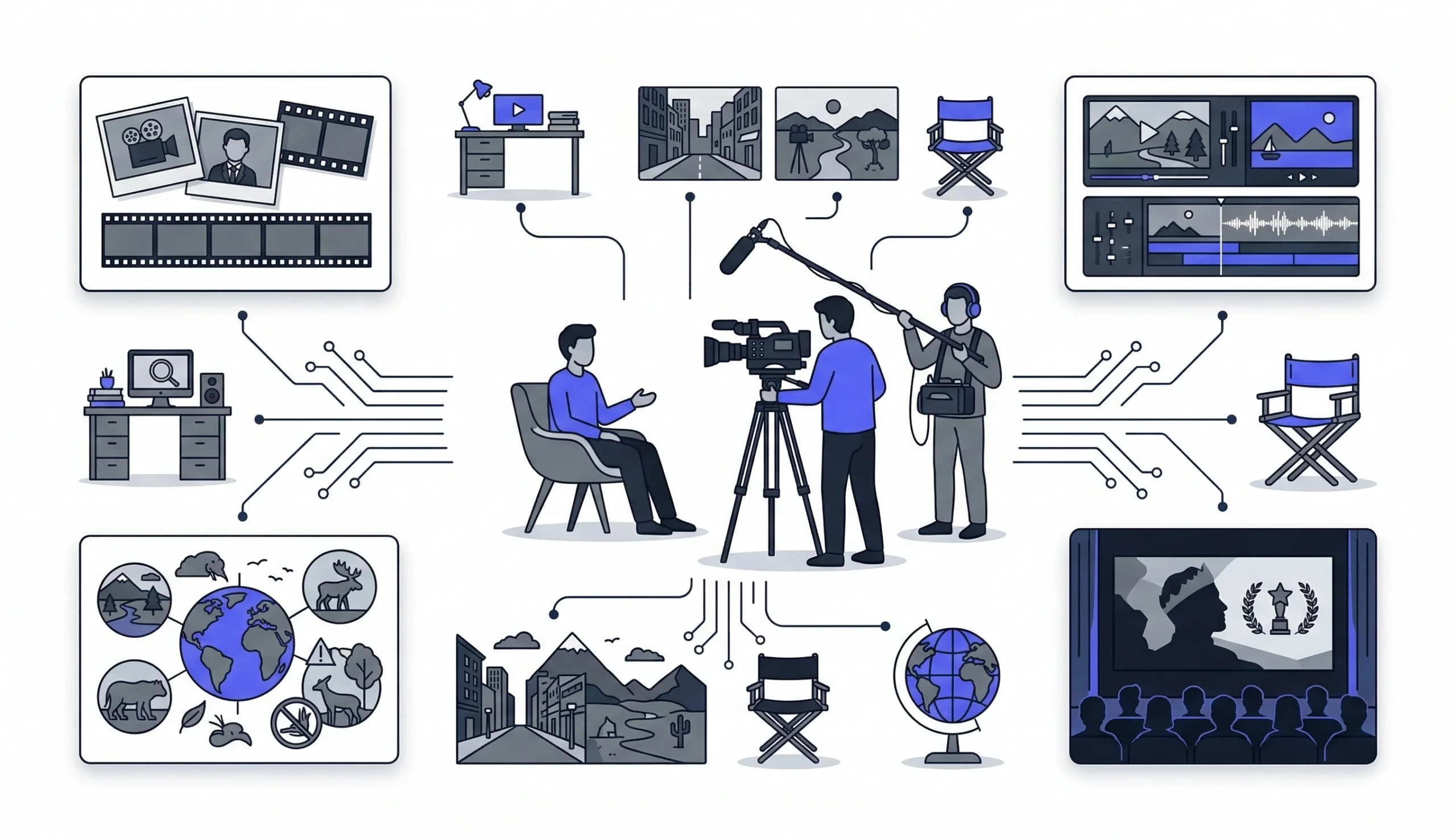
A documentary is a nonfiction film that presents real events, people, or issues. Filmmakers use documentaries to inform, educate, or explore reality. Unlike fictional movies, documentaries rely on real footage, interviews, or factual narration to tell true stories.
Key Takeaways
- A documentary is a nonfiction film focused on real people, events, or issues.
- Documentaries aim to educate, inform, or explore real-world topics.
- Different styles exist, including observational and participatory documentaries.
- Filmmakers often use interviews, narration, and real footage to tell the story.
Observational Documentary
Captures real-life situations with minimal filmmaker interaction.
Participatory Documentary
The filmmaker interacts directly with subjects through interviews or participation.
What Defines a Documentary Film
A documentary belongs to the nonfiction film category. Therefore, its purpose is to explore real subjects rather than create fictional narratives. Filmmakers often investigate social issues, historical events, or cultural topics.
For example, a wildlife documentary shows real animals in their natural habitats. Similarly, historical documentaries analyze past events using interviews, archival footage, and expert commentary.
However, documentaries still involve storytelling. Directors choose what footage to include and how to structure the narrative. As a result, each documentary reflects a particular perspective or theme.
Types of Documentary Films
Filmmakers use different approaches when creating documentaries. Consequently, several styles have developed over time.
Observational Documentary
Observational documentaries capture real-life events as they unfold. The filmmaker tries to remain invisible, allowing viewers to observe situations naturally.
Because the camera acts like a “fly on the wall,” scenes appear authentic and unscripted. Many nature documentaries and social documentaries follow this style.
Participatory Documentary
Participatory documentaries involve the filmmaker directly. In this approach, the director interacts with the subject, often through interviews or on-camera conversations.
For instance, investigative documentaries frequently use this format. The filmmaker may ask questions, explore evidence, or even become part of the story.
Pros
- Provides factual and educational information
- Raises awareness about real-world issues
- Can preserve historical events and stories
Cons
- Editing choices may influence viewer perception
- Some documentaries present subjective viewpoints
Comparing Documentary Styles
Expert Insight
Many experts consider documentaries one of the most powerful storytelling formats. Because they combine factual information with visual storytelling, documentaries can influence public opinion and raise awareness about important issues.
Meanwhile, streaming platforms have increased the popularity of documentary films. As a result, audiences now watch documentaries on topics ranging from science and history to crime and environmental issues.
Frequently Asked Questions
Is a documentary fiction or nonfiction?
A documentary is nonfiction. It focuses on real people, real events, or real issues rather than fictional stories.
What is the purpose of a documentary?
Most documentaries aim to inform, educate, or investigate real topics. They often explore social, political, historical, or environmental subjects.
Do documentaries always show the full truth?
Not necessarily. While documentaries use real footage and facts, filmmakers still shape the narrative through editing and storytelling choices.
Summary
- A documentary is a nonfiction film about real events or people.
- Filmmakers use documentaries to educate, inform, or explore issues.
- Observational documentaries show events naturally without interference.
- Participatory documentaries involve the filmmaker directly in the story.
- Editing and perspective can influence how the story appears.