

Quick Answer
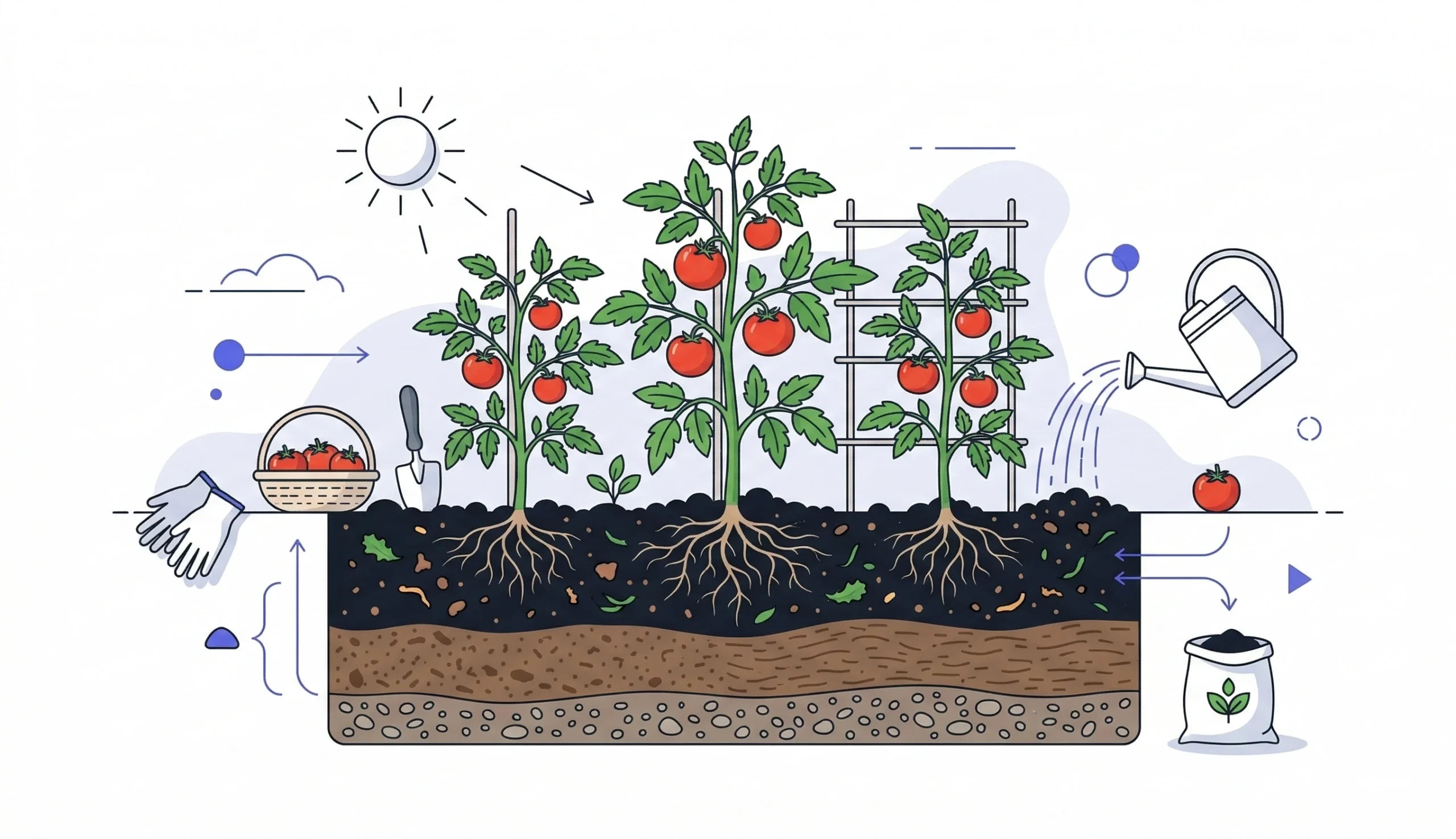
Tomatoes grow best in loamy, well-draining soil rich in organic matter. Loam provides the right balance of sand, silt, and clay, allowing water retention while still draining properly. Slightly acidic soil with a pH between 6.0 and 6.8 helps tomatoes absorb nutrients efficiently and produce healthy fruit.
Why the Type Matters
The type of soil used for tomatoes directly affects plant growth, fruit quality, and yield. Tomatoes have relatively deep root systems that require soil capable of holding nutrients while allowing oxygen and water to circulate.
The right soil type helps tomatoes:
- develop strong root systems
- absorb nutrients efficiently
- maintain consistent moisture levels
- avoid root rot and fungal diseases
Poor soil conditions, on the other hand, can lead to weak plants, poor fruit production, or nutrient deficiencies.
Main Types of Soil for Tomatoes
Several soil types can support tomato growth, but some perform significantly better than others. The two most commonly recommended soil types are loamy soil and sandy loam soil.
Type 1: Loamy Soil
Loamy soil is widely considered the best soil type for tomatoes because it combines sand, silt, and clay in balanced proportions. This balance creates ideal conditions for root development, moisture retention, and nutrient availability.
Key Characteristics
- Balanced mix of sand, silt, and clay
- Excellent drainage with moderate moisture retention
- High fertility when enriched with organic matter
- Soft texture that supports root growth
Best Uses
Loamy soil works well in garden beds, raised beds, and containers. Gardeners often improve existing soil by adding compost to create a loamy texture that supports tomato growth.
Pros
- Excellent drainage and aeration
- Good nutrient retention
- Ideal structure for root growth
Cons
- May require compost to maintain fertility
- Can be difficult to achieve naturally in some gardens
Type 2: Sandy Loam Soil
Sandy loam soil contains a higher percentage of sand but still includes silt and clay. This soil drains quickly and warms up faster in spring, which can benefit early tomato growth.
Key Characteristics
- High sand content
- Excellent drainage
- Warms quickly in sunlight
- Requires organic matter to retain nutrients
Best Uses
Sandy loam is ideal in regions with heavy rainfall or poorly draining soil, where faster drainage helps prevent waterlogged roots.
Pros
- Excellent drainage prevents root rot
- Soil warms quickly in spring
- Easy to work with
Cons
- May dry out quickly
- Lower natural nutrient retention
Comparison Table
How to Choose the Right Type
When selecting soil for tomatoes, consider the following factors:
- Drainage: Soil should drain well but still hold some moisture.
- Organic matter: Compost improves fertility and soil structure.
- pH level: Tomatoes prefer slightly acidic soil (6.0–6.8).
- Texture: Soil should be loose enough for roots to expand easily.
- Climate: Heavier soils may work better in dry climates, while sandy soils suit wet climates.
Expert Insight
Experienced gardeners often improve their soil rather than relying solely on its natural composition. By adding compost, mulch, and organic fertilizers, even average soil can be transformed into an ideal environment for growing productive tomato plants.
Frequently Asked Questions
What soil pH is best for tomatoes?
Tomatoes grow best in slightly acidic soil with a pH between 6.0 and 6.8, which allows plants to absorb nutrients efficiently.
Can tomatoes grow in clay soil?
Yes, but clay soil should be amended with compost, sand, or organic matter to improve drainage and soil structure.
Is potting soil good for tomatoes?
High-quality potting soil works very well for container tomatoes because it provides good drainage and consistent nutrients.
Do tomatoes need fertilizer in good soil?
Even fertile soil benefits from balanced fertilizer or compost, especially during fruit development when nutrient demand increases.
Summary
- Tomatoes grow best in loamy soil rich in organic matter.
- Sandy loam soil is also suitable because of its excellent drainage.
- Ideal soil pH ranges between 6.0 and 6.8.
- Adding compost significantly improves soil structure and fertility.
- Avoid compact clay soils unless they are properly amended.